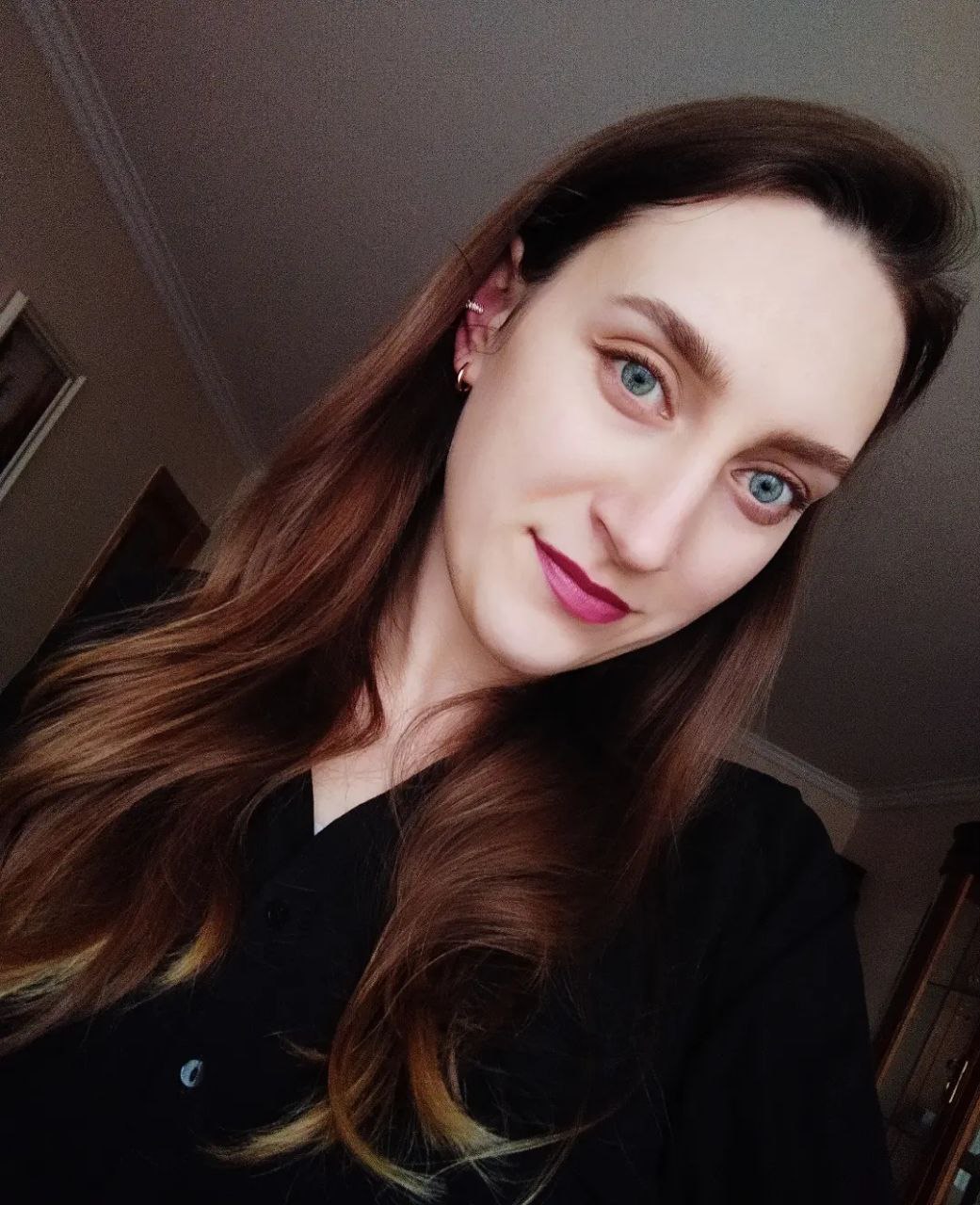

I kept seeing auburn in the salon chair next to mine this winter. Not the bright copper of fall, but deeper, richer, more brown than red. It looked expensive, like a secret between you and the light.
This roundup has 15 ways to wear Winter Auburn Hair Color. Some are low upkeep, some require a standing appointment. There’s a shade for fine hair, for curly hair, for anyone who wants warmth without screaming for attention.
I tried auburn once. It faded to brassy orange by week four. I learned that not all auburns are equal. This list is what I wish I had then.
Natural Red Auburn Curls

This is the rare color that looks like it grew out of your scalp, not out of a box. The natural red auburn color here leans brown with a copper undertone, which is what keeps it from screaming. On thick, curly hair, the technique matters more than the shade: a stylist has to weave the color through each curl, not paint it on flat, or you get stripes. Air drying is the whole styling routine, so it takes zero time in the morning. A trim every 12 to 16 weeks keeps the shape honest. The challenge is that red auburn fades faster than brown, and on curls it shows unevenly. Skip the heat and it holds its depth longer.
Getting this to look natural is a salon job, not a bathroom mirror one. The color has to be built in layers, darker at the root and lighter at the ends, or it flattens the curl pattern. My own attempt at this shade left me with a brassy mess by week three. Ask for a gloss over the lengths to keep the tone from pulling orange.
Bright Fiery Auburn Bob

Why settle for a muted auburn when this bright fiery auburn is right there, practically glowing? On a chin-length bob with wispy bangs, the color reads as a statement, not a suggestion. The wavy, fine texture here catches the light and makes the red look almost metallic. It’s the kind of shade that works for a holiday party or a Tuesday, because it refuses to be ignored. The bob needs trims every 6 to 8 weeks to keep the line crisp, and the bright color will need toning every 4 to 6 weeks to stop it from going orange. If you want subtle, this is not it.
Deep Dark Auburn Straight Hair

Confession: I expected this deep dark auburn to read as brown with a hint of red, and it does, until the light hits it and suddenly it’s all warmth. On thick, straight hair, the color sits evenly, no patchiness, no streaks. That’s because the technique here is a single-process application, not highlights, so the pigment goes on uniform. Air drying this length and thickness takes about 45 minutes, but that’s the whole styling routine. Trims every 10 to 12 weeks keep the ends from looking ragged.
The real story is how it holds up across a week. Dark auburn fades slower than bright copper, but it shifts toward brown, not orange, which is easier to live with. By day five, my roots showed a half inch of my natural color, and it blended fine because the base is close. A purple shampoo once a week keeps the red from dulling. This color is low maintenance, but it’s not no maintenance.
Deep Rich Auburn For Winter

I get it now. This deep rich auburn is the winter hair color you reach for when you are tired of the cold.
It is a single-process all-over color, warm and saturated, running over mid-back length layers. The loose waves give it movement but the color is the star. On thick, wavy hair the deep rich auburn reads as a solid block of warmth. Tone is pure winter comfort, no copper brightness, no red kick. Just an even, enveloping shade that matches the season’s instinct to huddle under a blanket. The technique is simple, one bowl of dye, no foils, no babylights. That means it is low complexity to get, but the depth comes from starting with a darker base. Mid-back length means you lose some detail in the back, but the waves catch the light when you turn. Winter’s muted light makes this shade look richer, not duller. Texture is the key here. Wavy and thick holds the color dense, never thin or patchy. This is the color equivalent of a deep wool coat, without the scratch.
Auburn And Blonde Color Block

This is not a weekend project. The auburn and blonde color block is a deliberate, salon-only design that demands a steady hand and a plan.
The technique divides the hair into distinct color zones. Black at the roots or in one section, auburn in another, blonde in a third. Mid-back length with long layers gives each zone enough room to breathe. The waves soften the transition but the blocks remain separate. Tone is high contrast, not blended. Texture is wavy, which helps the colors sit without sharp edges. The stylist paints each block with a separate bowl of dye, wrapping the rest in foil to prevent overlap. It is not a balayage or highlight. It takes three to four hours in the chair. If you try this at home, you risk muddying the borders and ending up with a mess. The verdict is clear: book the consultation, bring a reference photo, and let someone with a clear vision map the sections. This is not the time to experiment with a box kit.
Shoulder Length Deep Auburn With Intense Red Undertones

Ever loved a color that started brilliant and then betrayed you? This deep auburn with red undertones does that. The initial payoff is high, but the real work starts after the first wash. On shoulder-length wavy hair, it is a single-process color with heavy red, intense red that catches light. The single-process color deposits heavily but washes out fast. Texture is thick and wavy, flattering for vibrancy. But the downside hits at week three. The red undertones fade, leaving a brownish auburn. You will need a touch-up or tinted gloss every six to eight weeks to keep the intense red alive. Winter light makes it look richest, but the fade shows more against dark winter clothes. Worth the romance, but know the breakup is coming.
Striking Vibrant Copper-Red

The first shampoo is where the truth comes out. This vibrant copper-red on mid-back length wavy hair is a stunner on day one, a striking color that glows even in low light.
The technique is a single-process copper-red dye over a lightened or natural base. Tone is pure fire, no brown muddiness. Texture is wavy and thick, which diffuses the color and keeps it from looking flat. But the wear reality is that vibrant copper-red needs consistent care. It fades toward orange after three or four washes if you use warm water or cheap shampoo. Cold water and a sulfate-free wash pair help. A tinted mask or a copper gloss every four weeks keeps the striking color alive. Without that, the tone shifts. Mid-back length means you will be doing this upkeep all over. The payoff is a color that reads as intentional, high-energy, and decidedly not boring, but only if you stay on top of it.
Lustrous Warm Auburn Shade

This is the winter auburn that cooler reds wish they were. The lustrous warm auburn base hits that sweet spot between brown and copper, no brassiness, no burgundy, just depth. The warm undertones catch overhead light and throw it right back, which is why this mid-back length reads shiny even before you touch it. Thick wavy texture helps: a looser wave pattern lets the colour breathe instead of clumping it into dark patches. No bangs, a middle part that lands on the crown, long layers that fall below the shoulder blades.
Compared to a violet-based red, this shade stays approachable. It does not pull purple under fluorescent lights or turn brown in a cloudy room. It stays itself, which is exactly what I want from a colour I plan to keep all season.
Vibrant Auburn With Subtle Copper

Here is the technical truth about a vibrant auburn with copper highlights: the copper is not a separate colour, it is a density trick. The stylist takes the same auburn base and lifts select strands with a lightener, then dips them in a warm copper toner that reads as a glow, not a stripe. Collarbone length with curtain bangs that sweep outward, loose waves on thick texture, the copper sits mid-shaft and ends, leaving the root deep enough to soften grow-out. The subtle copper fades first, it always does, but the auburn base holds for weeks. What you get is dimension without the zebra effect that single-process foil highs create.
Medium Brown With Subtle Auburn

Who is this medium brown with auburn undertones actually for? The brunette who wants to test red without committing to a full colour change. The subtle auburn flickers in direct light, a warm glint on mid-back length wavy hair, then disappears back into brown when you step inside. No bangs, a middle part, loose waves that take about 25 minutes. The honest downside: this shade demands a professional hand. Drugstore dye goes one of two ways, too warm and brassy or not warm enough to matter. On medium density wavy texture, the undertones can land uneven if the stylist does not pre-lighten the mid-lengths. For brunettes whose natural base runs ashy, the auburn can read forced, leaning pink. And if the copper fades, which it will by week six, you are just medium brown with a blondish cast. My own test taught me that the subtle approach works best when you accept it as temporary. When it fades, it fades naturally, no harsh line, no patchiness, just a slow return to brown.
Dark Brown Lob With Balayage

I will say it plainly: a dark brown balayage with caramel and ash blonde beats an all-over colour for anyone who does not want to book a touch-up every four weeks. The lob length hits collarbone, loose waves on medium-density texture, a side part that breaks the horizontal line. The caramel sits in vertical ribbons through the mid-lengths, the ash blonde touches the ends and a few face-framing pieces around the part. All-over colour would need a root shadow and a gloss by week three. This? A toner every other month, maybe. The trade-off is this: the ash blonde can go dull by week six without a purple shampoo. And it is a salon job, not a bathroom-mirror project. The stylist maps the lightener pieces by hand, which takes skill, not guesswork. The grow-out is a soft blend, no line.
Rich Warm Auburn Mid-Back Waves

I’ll admit: I clicked on this one because the shine looked fake. It’s not. This rich warm auburn catches light like it’s been glossed yesterday. The mid-back waves fall in thick, loose loops, and the colour stays even from root to tip because the hair is dense enough to hold pigment. That thickness also means the colour takes longer to saturate in the chair, so plan for extra processing time.
Over a week, the warmth holds better than I expected. Wavy hair hides root growth for a while, but the real test is the tone staying copper instead of pulling orange. I refresh with a color-depositing conditioner every fourth wash. Trims every ten weeks keep the length from looking stringy. The lustre fades gradually, not all at once, which is the best compliment I can give a red-based colour. The waves themselves hold a curl for two days if I let them air-dry with a mousse. By day three, a quick refresh with a curling wand brings the shape back. The colour shifts in sunlight — deeper garnet indoors, brighter copper outside.
Natural Auburn Blend With Lighter Highlights

This natural auburn blend wins over a high-contrast color block every time. A block of blonde against auburn demands sharp roots and constant touch-ups. This blend uses lighter auburn highlights, placed subtly through mid-back layers, so the grow-out looks intentional rather than overdue.
The tone stays warm but never shouts. On wavy medium-density hair, the lighter auburn highlights catch light without a harsh line. It’s the kind of color that looks like you were born with it, not like you sat through a four-hour appointment. And that’s exactly the point.
Mid-Back Medium Brown With Subtle Auburn Highlights

The key to subtle auburn highlights is spacing them far enough apart that the medium brown base still reads as the main event. On thick, wavy mid-back hair, the stylist weaves fine ribbons of auburn through the mid-lengths and ends, leaving the roots untouched. This technique adds depth without overwhelming the base.
The tone stays warm but muted, so the highlights catch light in waves instead of flashbulbs. Wear is straightforward: the highlights fade gradually over eight to ten weeks, and the base color needs a gloss every three months to keep the brown from going flat. It’s a color that works with your hair’s natural movement, not against it.
Deep Auburn With Warm Copper Highlights

This is the color that makes you want to wrap a scarf around your neck. The deep auburn with copper highlights reads like a fireplace ember against winter light. On mid-back wavy hair, the subtle copper ribbons catch the gray daylight and throw it back warm. The tone is rich but not heavy, perfect for the season when the sun runs low. It’s a winter shade that doesn’t need snow to make sense.
Final Thoughts
- Tone at week six with a color-depositing conditioner.
- Wash in cool water to slow fading.
- Avoid chlorine and salt spray.
- Use a heat protectant every time.
- Get a gloss treatment every eight weeks.
After writing all of these, I still think deep auburn is the winter move. But I noticed something: the best ones have a little brown in them. That’s what keeps it from looking like Halloween. I’m booking the deep dark auburn straight hair next. It’s the one that made me stop scrolling.